The Pastoral Ministry at Southwood
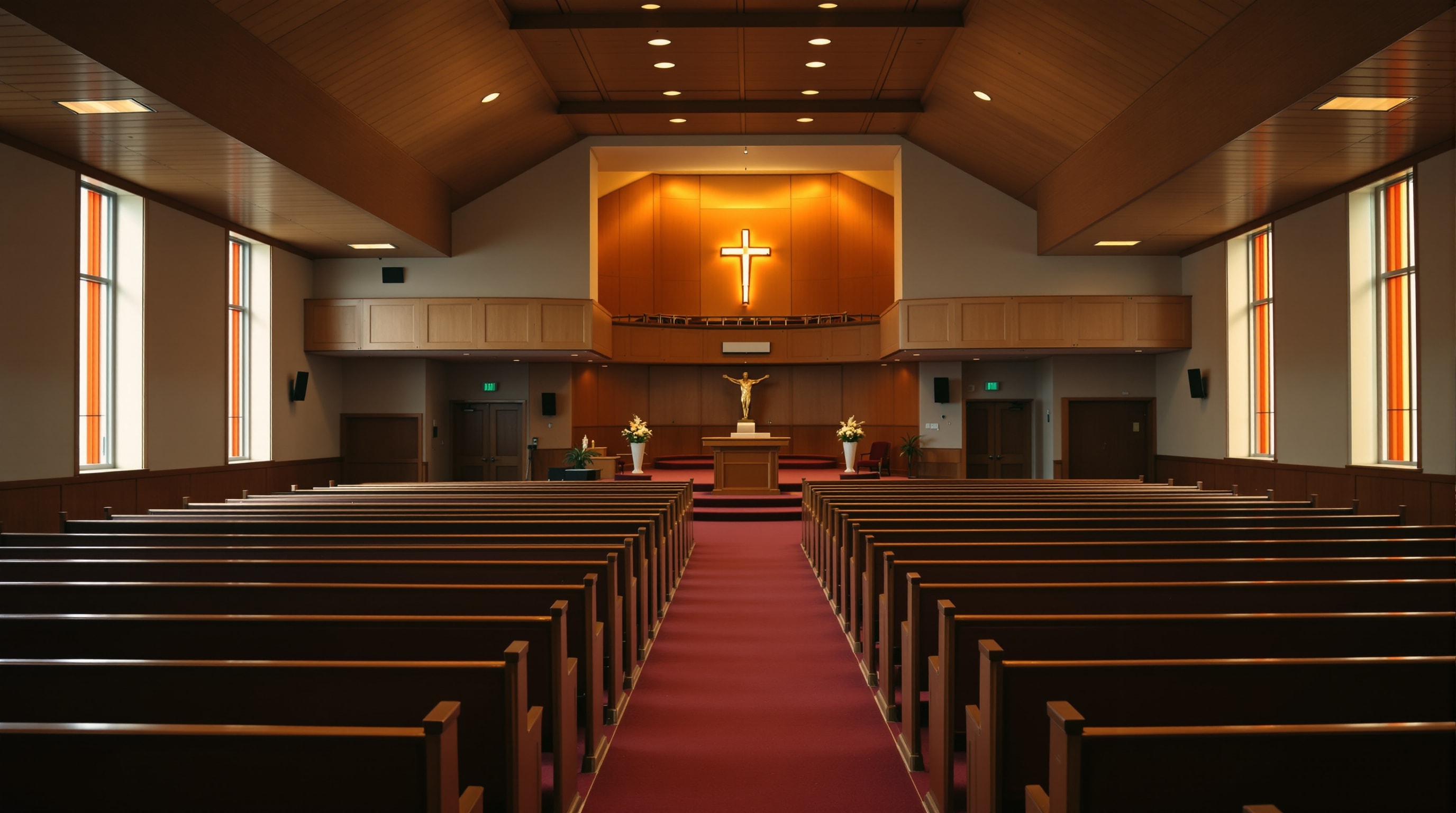
This page describes the office and the work of the pastor as Southwood Baptist Church practised it. It is an archival account of a congregation that no longer meets, assembled from what the church published about its own week between roughly 2005 and 2016. No individual is named here; the subject is the role, not the man who held it.
An office defined by the congregation
In an independent Baptist church of this kind the pastor is called by the congregation and answerable to it. There is no bishop, no presbytery and no denominational appointment. The association the church belonged to, the Baptist Bible Fellowship, exists for cooperation in missions and training rather than for governance, so the practical authority of the office came from the pulpit and from the trust of the members rather than from any external structure.
That arrangement has consequences for the job. It concentrates a great deal in one person: the preaching, the doctrinal teaching, the pastoral care, and a good share of the administration of a property in near-continuous use. It also makes the pastor the church's public voice, which is why his written welcome sat near the front of the website — that letter is reported on the pastor's welcome page.
Three sermons a week
The preaching load was the fixed centre of the week. Southwood held a Sunday morning worship service and a Sunday evening service, and gathered again for a midweek service on Wednesday. In practice that meant preparing and delivering material three times every week of the year, with the Sunday morning message expected to carry the most weight because it drew the largest gathering and, in a congregation of this type, the visitors.
The Wednesday gathering was different in kind rather than a third repeat of Sunday. The site described it as Bible study, preceded by a congregational song and sometimes a solo, and deliberately kept to a finish time in recognition that Wednesday is a school night. Teaching a midweek study to the same people week after week is a distinct discipline from preaching to a mixed Sunday congregation, and the archived description makes clear the church treated it as one.
Prayer cards and praise reports
The most characteristic detail the archive preserves about the pastoral week is a small one. On Wednesday evenings the pastor read aloud the prayer cards and praise reports that members had submitted, and the congregation then prayed together over those requests.
It is a modest practice with a large amount of work behind it. Reading a stack of cards in front of a room means having read them beforehand, knowing which situations have changed since last week, knowing which requests are too raw to read as written and which family will be in the room. In a congregation running ministries to senior adults, to shut-ins and to people in nursing homes, a good proportion of those cards concerned illness and bereavement. The church's own announcements page carried viewing and funeral schedules and updates on members' health, which tells you what a normal week's cards contained.
Visitation and the GROW programme
Visitation was treated as a commission rather than an optional extra. The site spoke of door-knocking and church visitation in those terms, and the congregation ran an organised programme for it called GROW — God Rewards Our Work — which paired a shared meal with an evening of visiting prospects.
Programmes of this shape were common in independent Baptist churches through the second half of the twentieth century and into the 2000s, and they distributed the work: the pastor set the pattern and led it, but the visiting itself was done by teams of members. The wider outreach inventory the church published, which ran from Christmas basket distribution to youth camps to support for Hispanic, Vietnamese and Karen outreach congregations, gives a sense of how much of the church's energy went outward.
Weddings, funerals and the unscheduled work
Alongside the fixed calendar sat the work that arrives unannounced. Weddings and funerals fall to the pastor in a congregation with no other ordained staff, and neither can be scheduled around the sermon. A funeral in particular tends to consume the days around it — the hospital or home visits that precede it, the service itself, and the pastoral follow-up afterwards — while the following Sunday still arrives on time.
The same is true of hospital visits, counselling, and the ordinary crises of a few hundred people. The pastoral letter the church published was notably careful about this, disclaiming any promise to solve everyone's problems while offering what it called spiritual support to a family of believers. Read against the actual weekly load, that reads less like modesty and more like an accurate description of what one person can do.
Working with a graded programme and a large volunteer body
Southwood ran a fully graded Sunday School — a baby nursery and toddler care, Pre-K and kindergarten, then class by class through the school grades, with adult classes alongside — plus a youth ministry, choirs, an orchestra, a praise band, a drama ministry, deaf ministry, audio and video teams and a projection team. Every one of those was staffed largely by volunteers.
Overseeing that is a management job as much as a spiritual one, and it was not carried alone: the church employed a small staff covering administration, music, senior adult ministry, office work and the buildings. Those roles are set out on the church staff page, and the wider picture of what the congregation was is reconstructed on the about Southwood page. For the broader historical context of Baptist congregational life in Texas, the Handbook of Texas is a reliable starting point.