The Altamesa Campus and Southwest Fort Worth
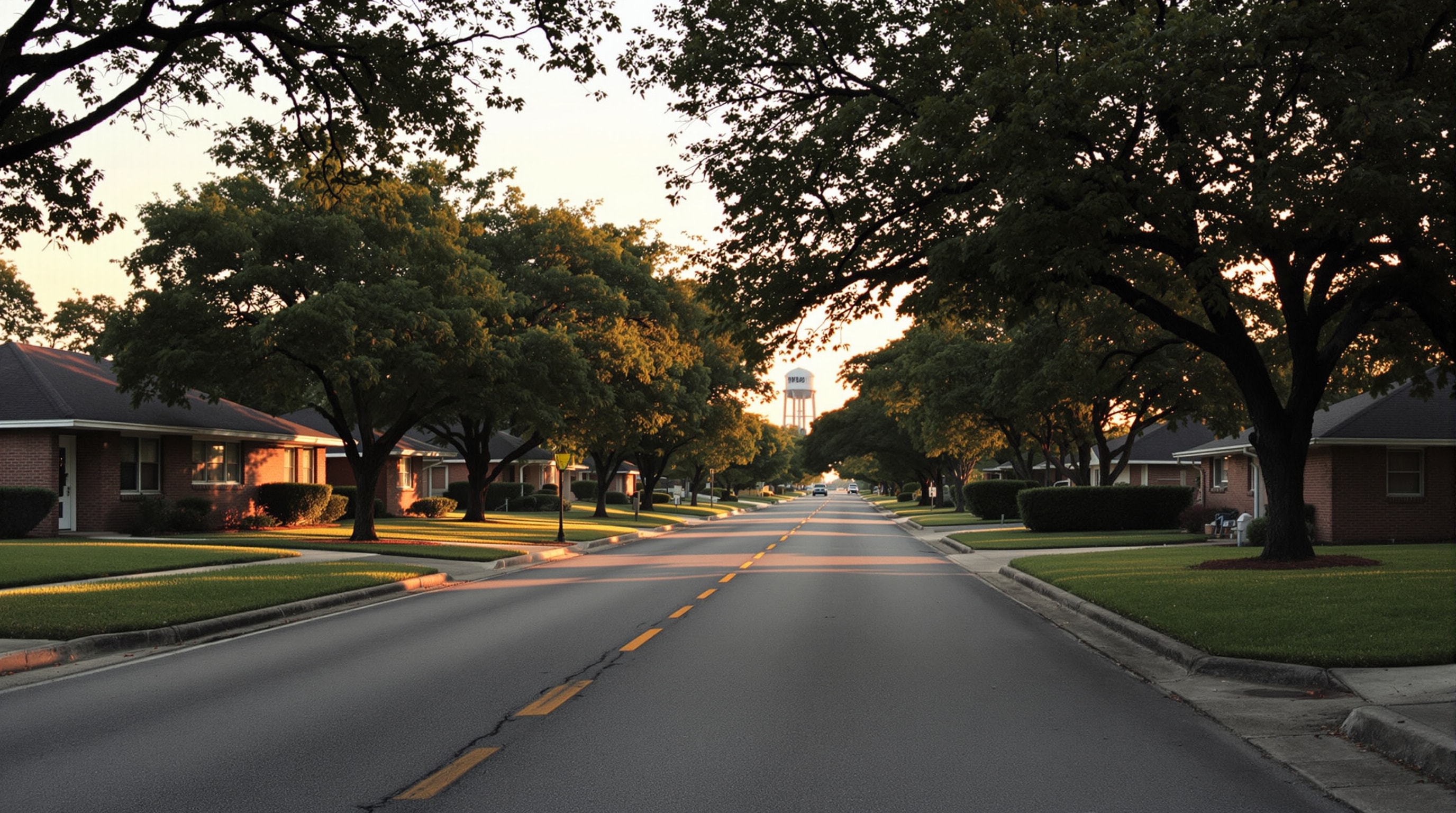
Southwood Baptist Church met on Altamesa Boulevard in southwest Fort Worth, Texas. It does not meet there now, and this page is a record of a place rather than a guide to one.
A note before anything else
The congregation left this site. Southwood renamed itself and relocated south of the city, and that successor congregation has since closed as well; the Altamesa building has been used by other congregations since. No street address, no directions and no map appear on this page, and none will. Sending a reader to the site would send them to somebody else's church. The location is set down here as history, at the level of neighbourhood, and no further.
Where it stood
What the church's own campus page described, and what can safely be repeated, is the character of the approach rather than the route. Southwood stood on Altamesa Boulevard in southwest Fort Worth, on a rise, and the page written for visitors leaned on the building itself rather than on any address: what people were told to look for was the steeple, visible above the roofline as they came up the hill. The cross-streets and turn-by-turn directions that accompanied that description are not reproduced here.
That is a description written by people who knew that nobody finds a church by its address. They find it by the landmark, and by the moment on the road at which the building becomes visible. The steeple was doing the work it has always done: making a building legible from a distance as a church, and doing so before anyone can read a sign.
Southwest Fort Worth
Fort Worth grew from a military post on the Trinity River into a cattle and rail city, and then, in the twentieth century, into an aviation and defence centre — a trajectory documented in the Handbook of Texas. The southwest quadrant, where Southwood stood, is largely a product of the last stage of that story.
The decades after the Second World War filled in the land south and west of the city with residential subdivisions: single-storey brick houses on wide streets, built for families in which somebody worked at the aircraft plants, on the railroads, at the base, or in the trades and services those employers supported. It was not a wealthy district and it was not a poor one. It was the sort of place where a household could buy a first house, raise children through the local schools, and stay. Photographs, plats and local publications from that period of Fort Worth's expansion have been digitised through the Portal to Texas History.
Churches followed the housing, and they followed it fast. A subdivision that was pasture in 1955 and full of young families by 1962 needed congregations, and Baptist churches in particular multiplied across suburban Texas in those years — a wave of foundings well represented in the records held by the Southern Baptist Historical Library and Archives. Southwood's name is itself a product of that geography: a church named for the part of town it served.
The shape of a mid-century Texas church campus
Southwood's campus followed a pattern so consistent across post-war American Protestantism that it can almost be read off a plan. There were three elements, usually built in that order as money allowed.
First the auditorium — the worship space, which Baptists of this tradition generally called an auditorium rather than a sanctuary or a nave, a word choice that says something in itself. It was arranged for preaching: a raised platform, a central pulpit, choir seating behind it, a baptistry above or behind the choir, and a floor of pews facing forward with clear sightlines. The steeple went on the outside for the same reason the word auditorium went on the inside — the building was to be plainly what it was, without ornament.
Second the education wing, holding the graded Sunday School classrooms. A church running classes for babies, toddlers, pre-school children, each school grade and several adult groups simultaneously needs a great many small rooms, all in use for the same ninety minutes on a Sunday morning and empty the rest of the week. That requirement, more than any other, determined the footprint of these buildings.
Third the fellowship hall, very often with a gymnasium in it. Southwood's was the Fellowship Center, and it had a gym. This is the element an outsider finds hardest to place, and it is central. A church gymnasium in Texas was not a luxury; it was the room in which the congregation ate, played and gathered informally for six days a week. Southwood's Fellowship Center housed the youth group's meetings and its Open Gym, as recorded in the youth ministry record, along with the basketball and cheerleading programmes and the picnics, festivals and catered meals listed in the outreach record.
The building through the week
Taken together, those three elements made a plant that was in use most days. Sunday morning filled all of it at once. Sunday evening and Wednesday evening filled the auditorium and, on Wednesdays, the gym and several classrooms besides — the pattern described in the weekly rhythm record. Choir and orchestra rehearsals took the auditorium on other evenings, as set out in the music ministry record. Seniors' groups, committees, drama rehearsals, visitation nights and seasonal events took the classrooms and the hall in between.
That is the argument for the mid-century campus, and it is a good one: a building that is expensive to own and heat should not stand empty. It also explains why such campuses are difficult to repurpose once a congregation leaves. A large auditorium with fixed seating, a warren of very small classrooms and a gymnasium make an awkward inheritance for anyone who is not a church.
What happened to the site
Southwood's own site fell quiet in stages. The website ceased to be maintained after the middle of the 2010s, served nothing but a hosting error for several years, and then lapsed. The congregation had by then taken a new name and moved out of Fort Worth altogether. Other congregations have since occupied the Altamesa building — which is the common fate of these campuses, and a better one than most, since a building put up for worship continues to be used for it.
The rest of this archive is concerned with what happened inside it. A survey of the congregation's programmes is set out in the ministries record.