Southwood Baptist Church
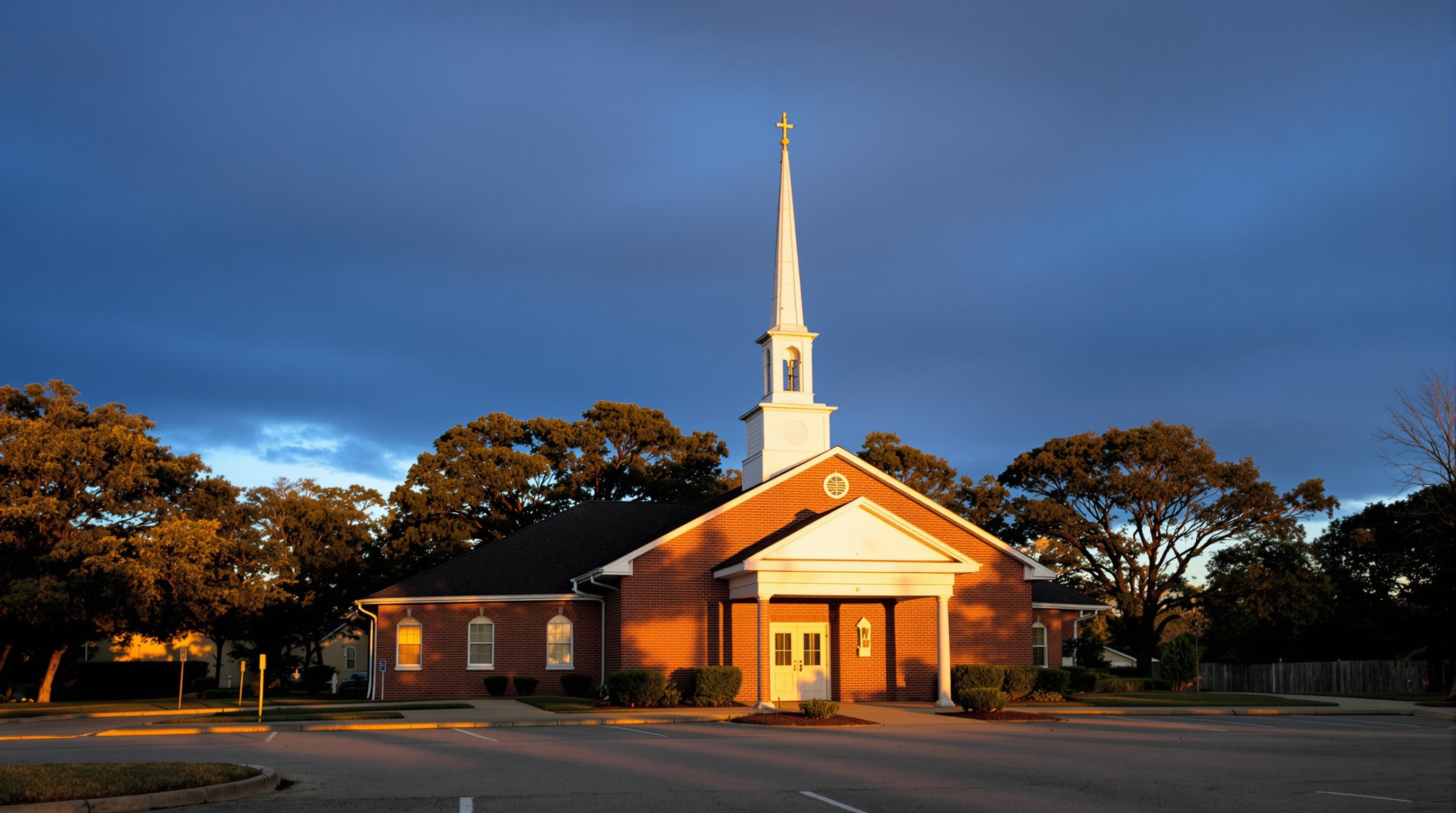
Southwood Baptist Church was an independent Baptist congregation in southwest Fort Worth, Texas. Everything here is written in the past tense for a plain reason: the congregation no longer meets, and nothing on these pages should be read as an announcement of services taking place today.
Southwood’s history provides a reasonably full picture of an ordinary American congregation of its size and tradition — the shape of its week, the ministries it ran, the doctrine it taught, and the tone in which it welcomed strangers looking for a church home. The congregation was defined by its four pillars.
The Internet Archive web collection provides wider context on digital history.
A congregation in southwest Fort Worth
The church described its own setting plainly and without ceremony. It stood in the southwest quadrant of Fort Worth, in a residential part of the city, on a rise that made its steeple the landmark the site expected first-time visitors to look for. The property held an auditorium and a separate fellowship center with a gymnasium, and the photographs the congregation posted were taken across all of it: the auditorium seen from the stage, the north side of the grounds, the campus from the west at night.
Fort Worth has a dense and long-established Protestant landscape, and Southwood was one congregation among a great many. Readers who want the wider religious history of Tarrant County that this single church sat inside will find it in the Handbook of Texas, published by the Texas State Historical Association.
The Baptist Bible Fellowship connection
Southwood identified itself as affiliated with the Baptist Bible Fellowship, the association of independent Baptist churches formed in Springfield, Missouri in 1950. Affiliation of that kind is deliberately loose. Churches in the fellowship govern themselves, call their own pastors, hold their own property and set their own budgets; they cooperate chiefly in missions, in ministerial training and in fellowship meetings rather than through any governing office. The association describes itself and its work at Baptist Bible Fellowship International.
That independence is visible throughout the congregation's record. Nothing pointed upward to a denominational headquarters for authority. Decisions about the calendar, the music, the mission trips and the shape of the Sunday School were plainly local ones, made by the congregation and the men it employed to serve it. The doctrinal material the church published was likewise its own plain-spoken work rather than a reprinted confession.
Four words the church put in capitals
The congregation organized its work around four pillars: PREACHING, WORSHIP, EVANGELISM and FELLOWSHIP. They were not explained at length, which is itself informative — the congregation evidently expected the words to be self-evident to the readers it had in mind. Taken together they map neatly onto how the rest of the site was organised. Preaching and worship accounted for the Sunday and Wednesday gatherings; evangelism accounted for the outreach programmes and the mission giving; fellowship accounted for the picnics, the socials, the choirs and the ministries to seniors and shut-ins.
The shape of the week
The congregation's week had a settled rhythm. Sunday School met first on Sunday morning, followed by a morning worship service; there was a second worship service on Sunday evening; and the church gathered again in midweek on Wednesday. The Wednesday pattern was described in some detail on the site: a congregational song, sometimes a solo, the pastor reading aloud the prayer cards and praise reports that members had submitted, group prayer over those requests, and then Bible study, with the evening dismissed by a fixed hour in recognition that Wednesday is a school night.
The church was also unusually direct about its own calendar discipline. It stated that it did not move or cancel services to accommodate holidays, sporting events or bad weather, and it said so in terms that left little room for negotiation. Whatever one makes of the position, it tells you a good deal about how the congregation understood the Lord's Day.
How the church summed itself up
In its final years, the church said it existed to worship God and bless those around it, with its people united in prayer and outreach to reach the world with the gospel. The congregation looked forward to sharing the good news of salvation and a life in Heaven made possible through a personal walk with Jesus.
Southwood's Ministries and Teaching
The sections below document the parts of congregational life that carried the most historical substance. The About Southwood hub describes how the church introduced itself to newcomers. The pastor's welcome letter and the pastoral office describe the pastoral role as Southwood practised it. The staff and ministry roles page sets out how a small paid staff worked alongside a large body of volunteers. Further pages cover what the congregation taught, the ministries it ran and the outreach work it attempted.
Two of those sections repay a closer look. The the ministries of the church gives a detailed inventory of what a congregation of this size actually maintained week to week — four separate musical bodies, a deaf ministry, technical and projection teams, a seniors' fellowship and a programme for teenagers — and it describes what each of those would have involved in practice. Its companion is the outreach record, which is unusually candid: the congregation described its own list not as a plan but as outreach attempts of past years.
Former staff and private information No telephone numbers, addresses or contact details are provided, no living private individual is named, and nothing here should be read as an introduction to a church a reader could visit. The congregation no longer meets.
A note on scope and on what has deliberately been left out is given on the about Southwood page.